ON-CHAIN SIGNALS: Onchain Data Analyst Master Course
Master course for beginners starting onchain analysis. Build practical analysis systems including whale patterns, bridge and stablecoin flow analysis, and Dune utilization.
About the Instructor
코인크래프트
Course Overview
ON-CHAIN SIGNALS
On-Chain Data Analyst Master Course
The Real Market Movement You Can't See
Price charts, news, influencers…
It's become difficult to read the market with just those anymore.
The starting point of this course is simple.
"Where is money actually moving, and through what pathways?"
Let's verify that directly with data.
On-chain analysis is not
"what others say"—
it's the technique of interpreting the market based on facts already recorded on the blockchain.
This course is taught by the author of 『ON-CHAIN SIGNALS: The Real Market Movement You Can't See』, restructured as a practical integrated beginner-to-advanced on-chain analysis course designed to be immediately applicable in real investment and analysis settings.
🎯 What You'll Gain from This Course
After completing this course, you'll be able to…
- Interpret the market through capital flows (Flow) rather than coin prices.
- Read and explain addresses, transactions, blocks, and event logs on your own.
- Create your own on-chain dashboard using Etherscan and Dune.
- Through bridges, stablecoins, and whale addresses, explain with data
where money is moving from and to, and why, right now. - Develop the intuition to design reports, content, and investment strategies based on on-chain data.
👤 This Course Is Built For
- Investors and traders who want to know where real money actually goes, beyond just charts
- Aspiring analysts, PMs, and researchers who want to create on-chain data-based research and reports
- Planners and operators designing Web3 businesses and services who need to understand the actual movement of users and capital
- Those who've only "looked at" tools like Arkham, Nansen, and Dune and want to learn them systematically and properly once and for all
- Those who want to build "on-chain analysis" as a long-term career pillar
No programming knowledge required.
However, bringing curiosity to understand numbers and structures is essential.
🧭 Course Structure at a Glance
Part 1. Entering the World of On-Chain Analysis – "The Section Where the Invisible Becomes Visible"
- On-Chain vs. Off-Chain: What gets recorded and what doesn't
- How information asymmetry shrinks, and why "recording is opportunity"
- The structure of how addresses, transactions, and blocks leave trails of money flows
- Organizing "the mechanism connecting on-chain analysis to actual investment strategy"
[Example] On-Chain Analysis: Advantages and Limitations at a Glance
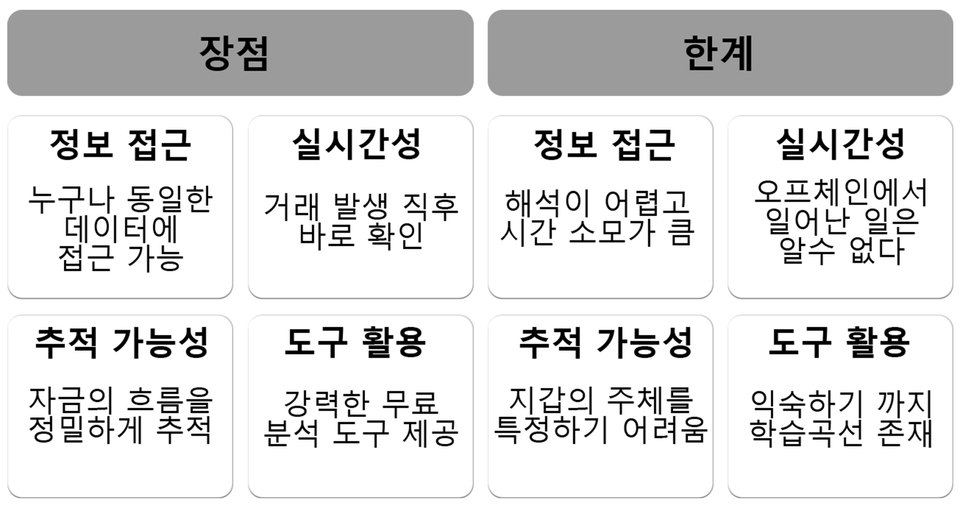
A comparison table that quickly summarizes why on-chain analysis is powerful and where interpretation remains possible.
Through this table, you'll intuitively understand the nature and scope of on-chain data.
[Example] On-Chain Transaction Flow: Creation → Signing → Validation → Recording
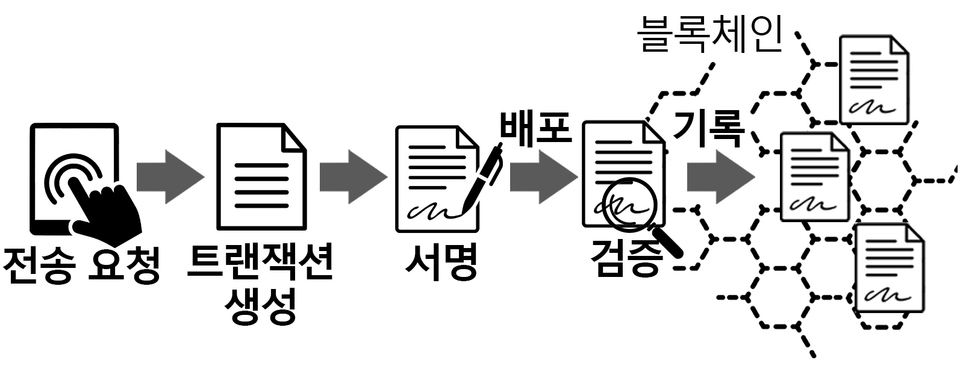
The section where you visually understand the entire process of how on-chain data is created and recorded on the blockchain. Once you grasp this process, subsequent Etherscan analysis becomes much easier.
Goal of this section:
To give you the sense that "on-chain analysis" is not an abstract concept,
but a real tool that can change how you act.
Part 2. Mastering the Tools – "Arming Yourself with Etherscan & Dune"
Etherscan
- Reading address profiles: Are they a whale or a rookie?
- How to interpret Input Data / Internal Txns / Logs / State in transaction detail windows
- How to read the market's rhythm by block
[Example] Etherscan: The Starting Point of On-Chain Data
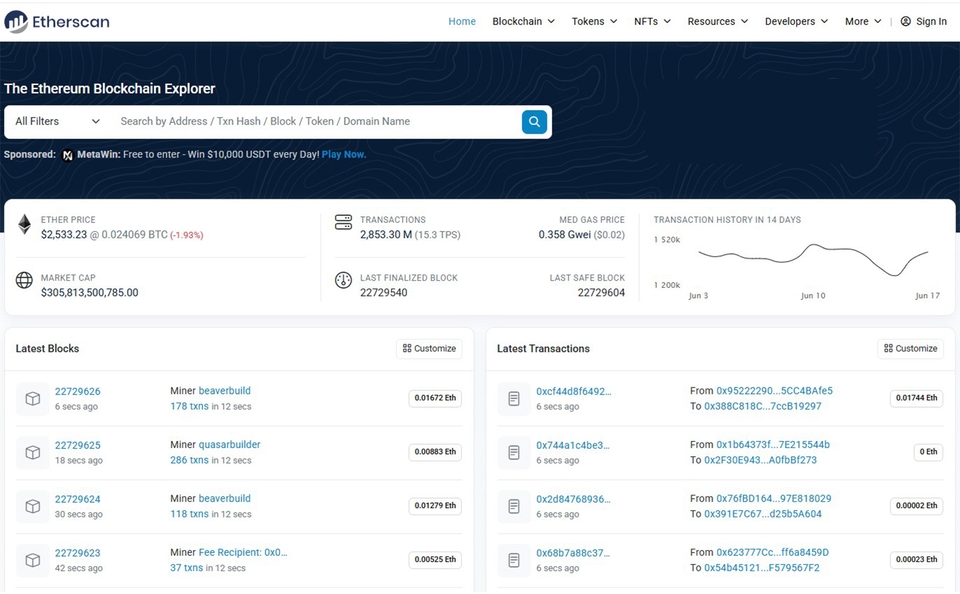
You'll learn how to read and understand the basic structure of transactions, blocks, addresses, and contracts yourself.
This is the first step in understanding 'fact data' recorded by the actual blockchain, not price charts.
Dune
- Using already-built dashboards to view stablecoins, bridges, whales, CEX deposits/withdrawals, and more
- Understanding query structure and modifying by changing a few numbers to fit "the questions you want to ask"
- Hands-on practice in writing simple queries yourself to extract on-chain data into charts
[Example] Dune: Learning to Interpret DeFi and DEX Data Yourself
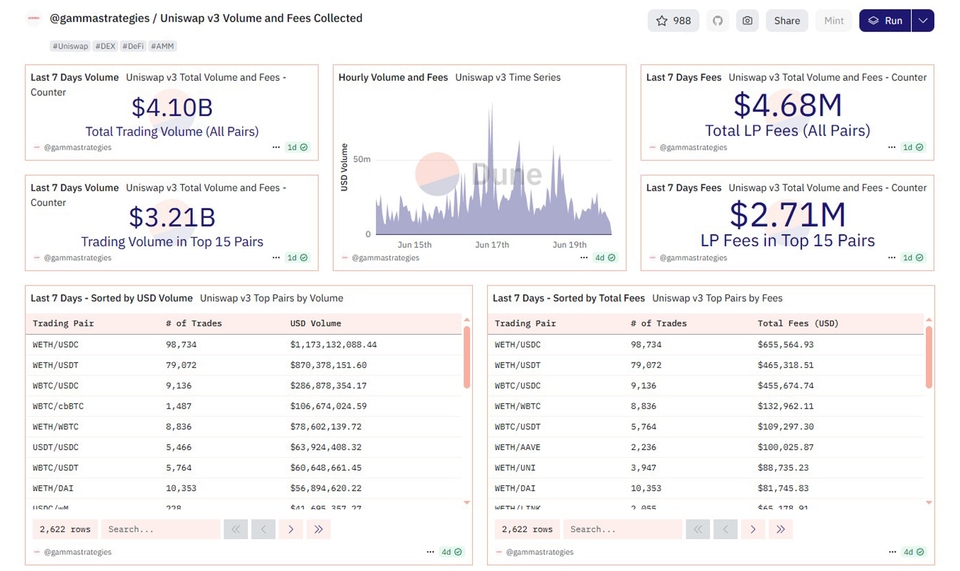
Learn how to analyze Uniswap v3 trading volume, fees, and pair flows directly through queries.
This section builds your ability to gauge DeFi market strength through data, not news.
Goal of this section:
To give you the sense that Etherscan and Dune are no longer intimidating, but tools you command.
Part 3. Reading the Money Flow – "Developing the Eye to Interpret Bridges, Stablecoins, and Whales"
Bridges
- Funding movement structures between L1 ↔ L2, chain ↔ chain
- Differences and analysis points for each bridge type: Lock & Mint / Burn & Mint / Liquidity-based, etc.
- Following actual bridge transactions through Etherscan & Dune to see the "first paths money takes"
[Example] How Are L1 → L2 Bridge Messages Actually Recorded?
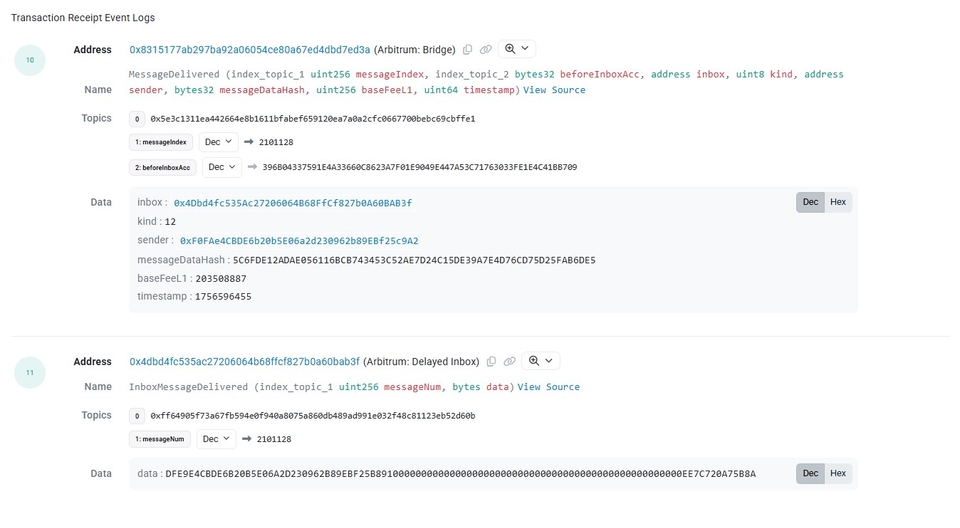
Learn how to track L1→L2 message delivery using event logs alone.
[Example] The Essence of Bridges: Message Creation → Registration → Execution. Understanding This Flow Reveals the Chains.
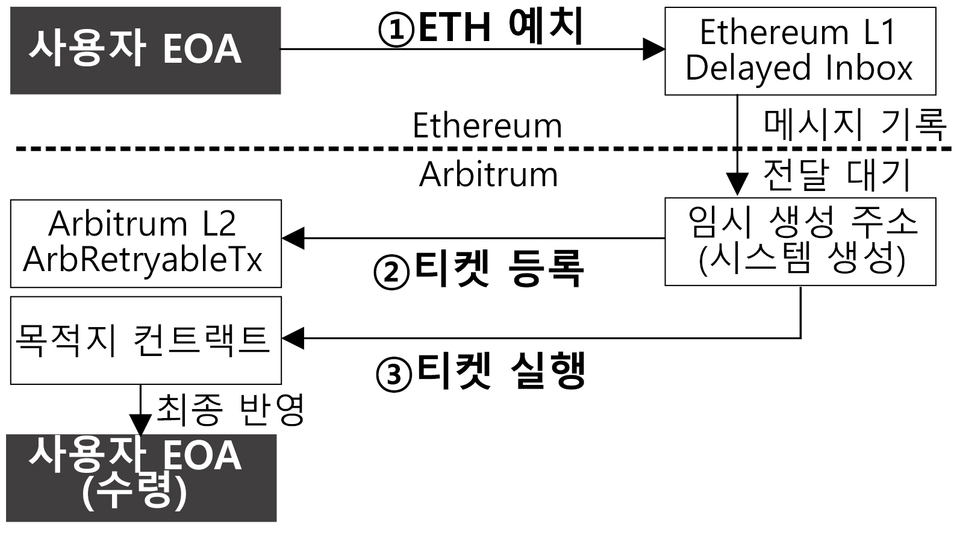
Understand the entire bridge message flow from deposit to L2 execution at a glance.
Stablecoins (USDT, USDC, etc.)
- Viewing stablecoins as "assets that reflect market sentiment"
- Reading through net inflows and outflows (Netflow) to understand "is money flowing in or draining out right now?"
- Connecting cross-chain movement and CEX deposits/withdrawals to interpret "which chains and sectors are getting attention now?"
[Example] Reading Market's 'Pulse' Through Stablecoin Net Issuance
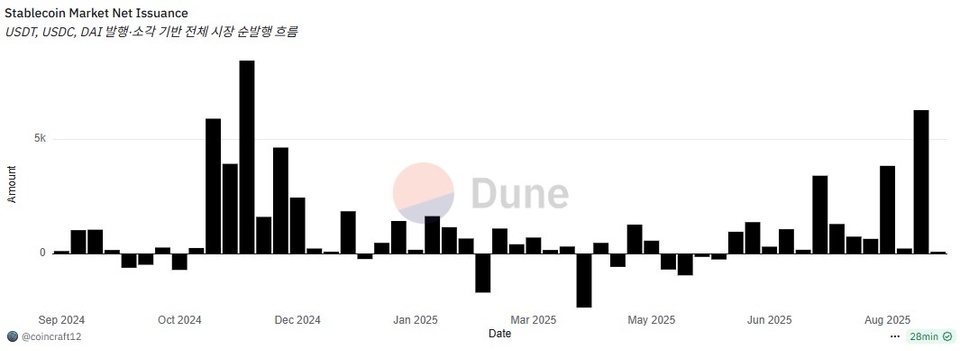
Analyze the entire market's liquidity flows by consolidating issuance and burn volumes of major stablecoins like USDT, USDC, and DAI. Periods of increasing net issuance signal new dollar inflow into the market, while decreasing periods act as warning signals of capital drainage.
[Example] Cross-Chain Movement via CCTP — Grasping USDC's Actual 'Capital Movement Pathway'
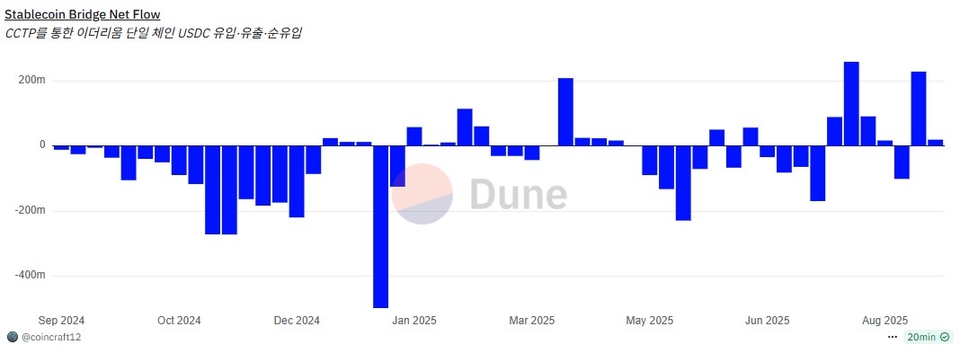
Analyze USDC's inflow and outflow through CCTP (Chain-to-Chain Transfer Protocol) to identify which chains are losing capital and where funds are flowing.
Especially, Ethereum mainnet-based inflow/outflow is critical data for detecting institutional and whale strategic position changes.
[Example] Centralized Exchange (CEX) Deposits/Withdrawals — Tracking Actual Buy and Sell Pressure
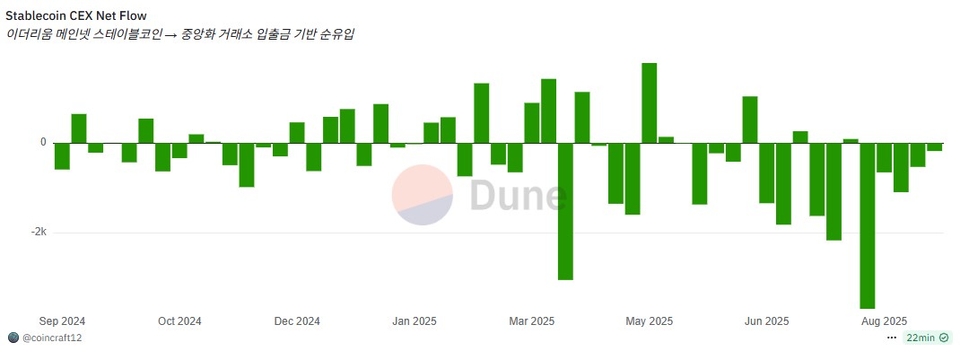
Through stablecoin exchange deposits and withdrawals, determine whether market participants are risk-on (preparing to buy) or risk-off (cashing out). Large-scale stablecoin withdrawals in particular are major leading indicators of increased spot purchase potential.
Whale Addresses
- Criteria for selecting whale addresses and their types
- Reading typical behavioral patterns of whales: split accumulation, sweeps, key transfers, counterparty cycles, and more
- Using the advanced whale address dashboard tool created by the instructor
[Example] Whale Radar — On-Chain Scanner That Detects Whale Candidates in Real-Time
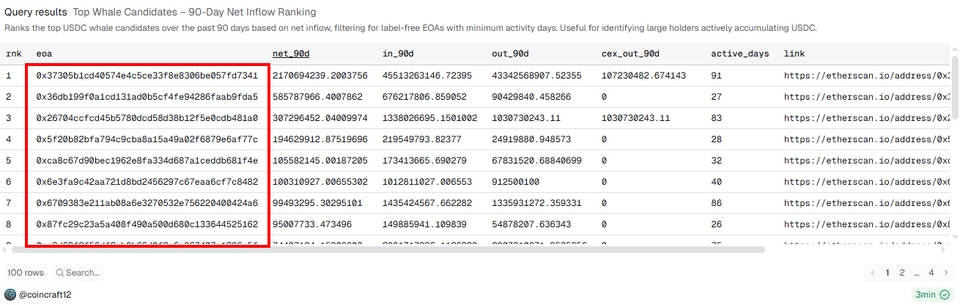
Automatically identifies 'the real whales moving the market right now' by analyzing USDC net inflows and activity patterns by period. A critical tool for tracking whale footprints with data instead of rumors.
[Example] Whale Deep-Dive Dashboard — Completely Dissecting a Single Whale Address in Your Analysis Lab
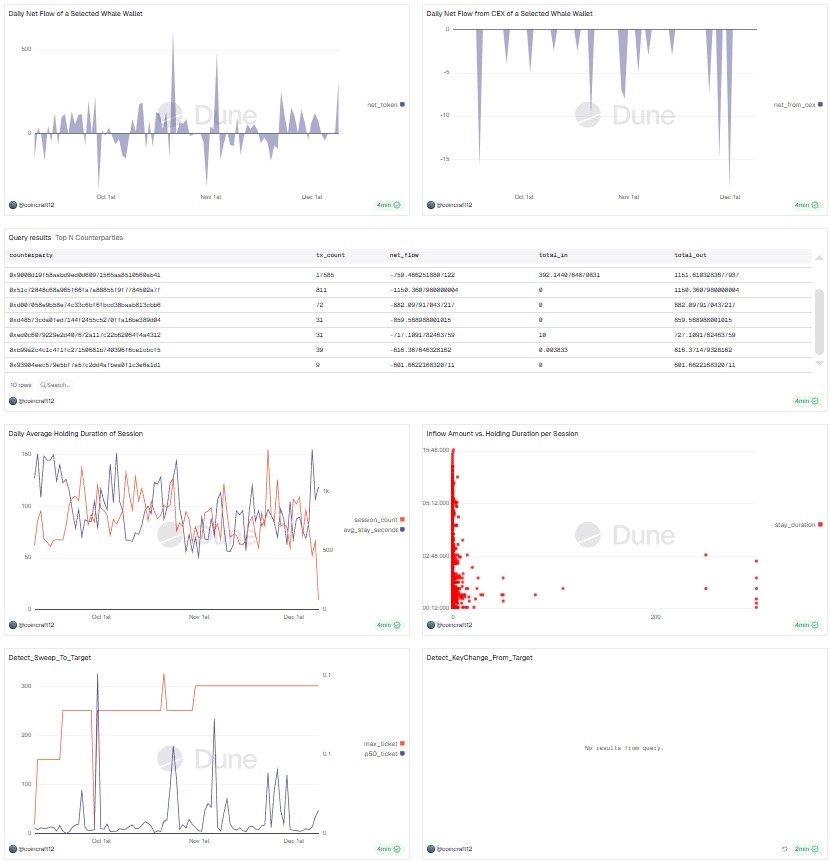
Comprehensively analyze a specific whale wallet's daily net inflows, CEX movements, top N counterparties, session holding duration, sweep patterns, and more in one dashboard. Develop advanced analytical skills to interpret 'why is this whale moving this way?' on your own.
Goal of this section:
Moving beyond mere rumors like "a whale is buying," develop the ability to clearly explain in your own words:
"This address moved this way, and here's what that means."Additionally, develop the capability to find and interpret key whale wallet addresses—the major players moving the market—yourself.
Part 4. Moving Forward – "Advanced Analysis" and "Living as an On-Chain Analyst"
- How to use advanced on-chain tools like Arkham, Nansen, and DeBank from the right perspective
- Combining free and paid tools strategically for your purposes
- An on-chain analyst's daily routine; actual methods of weaving on-chain data into research, reports, dashboards, and content creation
- The roadmap for growing from investor → data consumer → "interpreter and architect"
[Example] Advanced On-Chain Analysis Tools: Arkham, Nansen, DeBank
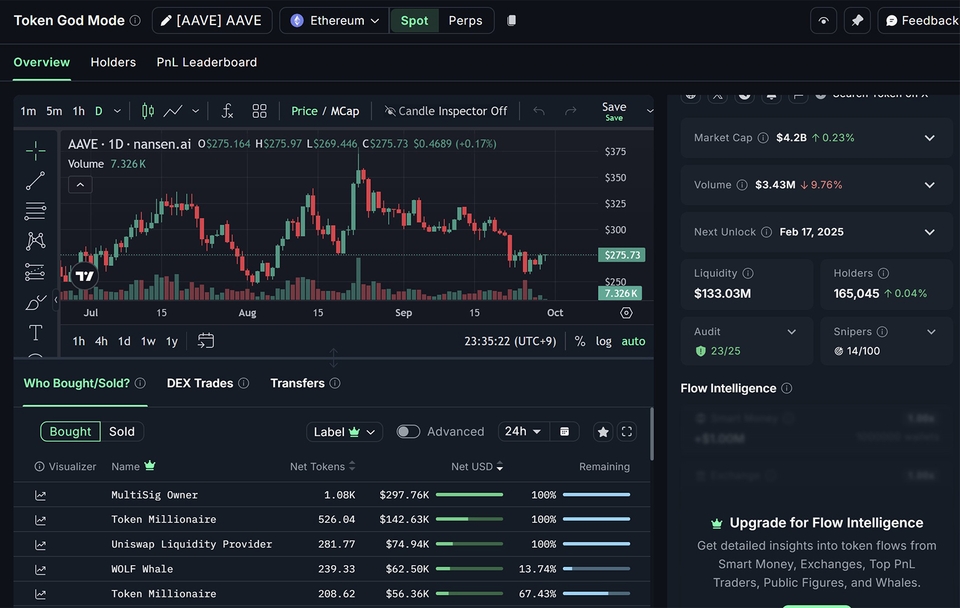
Learn the address identification, smart money tracking, and capital flow analysis tools used by on-chain experts with actual screenshots. Gain advanced analytical skills that move beyond simple queries to interpret whale movements, risks, and patterns.
Goal of this section:
Not to stop at "I learned this," but to connect it to "what will I actually do with this going forward?"Develop advanced analysis techniques and tool proficiency necessary for growing as an on-chain analyst, while organizing learned content into forms immediately applicable in real-world settings.
Appendix. For Those Who Want to Go Deeper
- On-Chain Analysis in the AI Agent Era – The Future Ahead
- How to Identify Scam Tokens – Essential on-chain fraud patterns you must avoid
- Rug Pull Case Analysis – Understanding sophisticated rug pull fraud structures through the SQUID token incident
[Example] Practical Defense Against Scams and Rug Pulls: Learning by Seeing Fraud Patterns Firsthand
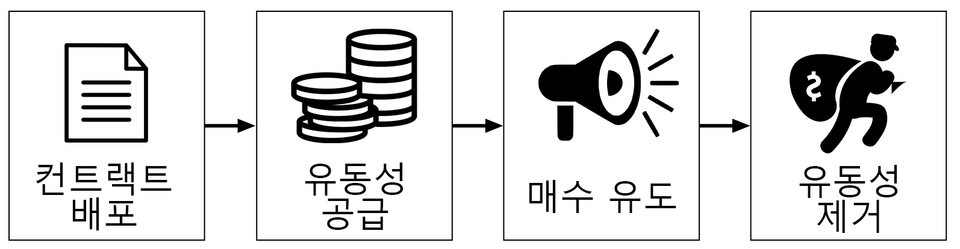
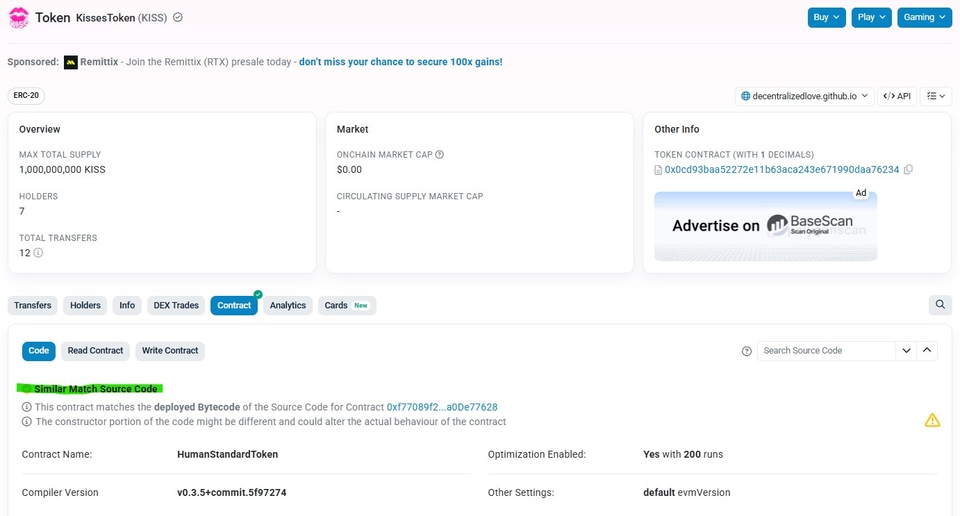
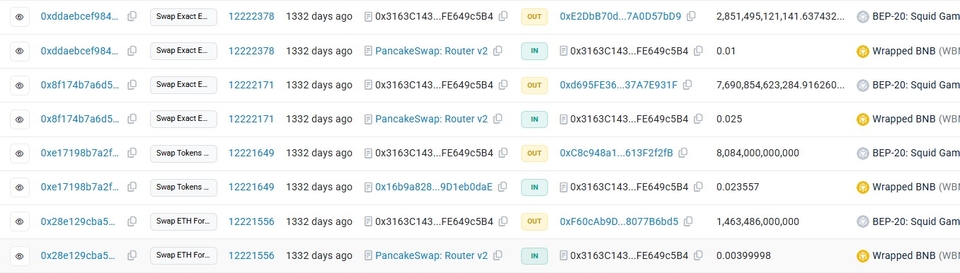
In the appendix, directly verify common fraud types occurring in actual markets—scam token structures, rug pull stages, liquidity removal tricks, and more—through on-chain data.
Now you'll be able to judge how to avoid them, rather than ask "why did I fall for it?"
🌱 Your Changes After Taking This Course
- You'll develop the habit of opening Etherscan and Dune to verify directly, rather than being swayed by Telegram/Twitter rumors.
- You'll move beyond "this coin looks good" to viewing the market three-dimensionally: "these addresses, this bridge, this stablecoin flow is telling this story."
- You'll grow from a simple investor to someone who translates on-chain data into language, narrative, and strategy.
- And above all, you'll develop the eye to distinguish scams and rug pulls yourself, without relying on outside reputation.
You'll gain the ability to detect "this is risky" before others by directly reading liquidity, contract, and internal transaction flows.
📚 Reference Materials
The on-chain analysis concepts and practice examples covered in this course are organized more systematically in the 『On-Chain Analysis Series』 books.
Learn more: https://ccpress101.cafe24.com/surl/O/24
Curriculum
수강생 리뷰